
Back to all blogs
Software Development

Bridging the Gap: Effective Strategies for Global Software Development Teams

REEA Digital Team6 min read
Share:
Bridging the Gap: Effective Strategies for Global Software Development Teams

Globalization means software development is no longer tied to one place. It is now common for development teams to work on a project around the clock from several countries. These teams bring a wide range of skills and talent, but they also face unique challenges, and the ability to bring a distributed team together can decide whether a project succeeds or fails. This article covers practical ways to help global software development teams work effectively.

The Rise of Global Software Development Teams

Organizations everywhere are going global. By building international teams, companies can pool different skills, reduce costs and keep work moving at all hours. But managing a team spread across regions means dealing with different languages, cultures and ways of working. These challenges need to be managed systematically to keep the team aligned and productive.

1. Prioritize Effective Communication

Why it matters:

In international teams, effective communication is central to coordination. Communication problems can slow down, or even completely derail, the timely delivery of the team's work.

Strategies for success:

Keep It Simple: Cut out jargon and avoid long, complicated sentences. Plain language makes communication easier for every team member, wherever they are.
Use the Right Tools: Slack, Microsoft Teams, Zoom and similar tools help teams overcome communication barriers.
Keep Records: Make a habit of documenting project details, decisions and updates in shared documents. Written records build trust and keep everyone on the same page.

2. Scheduling Across Time Zones

Why it matters:
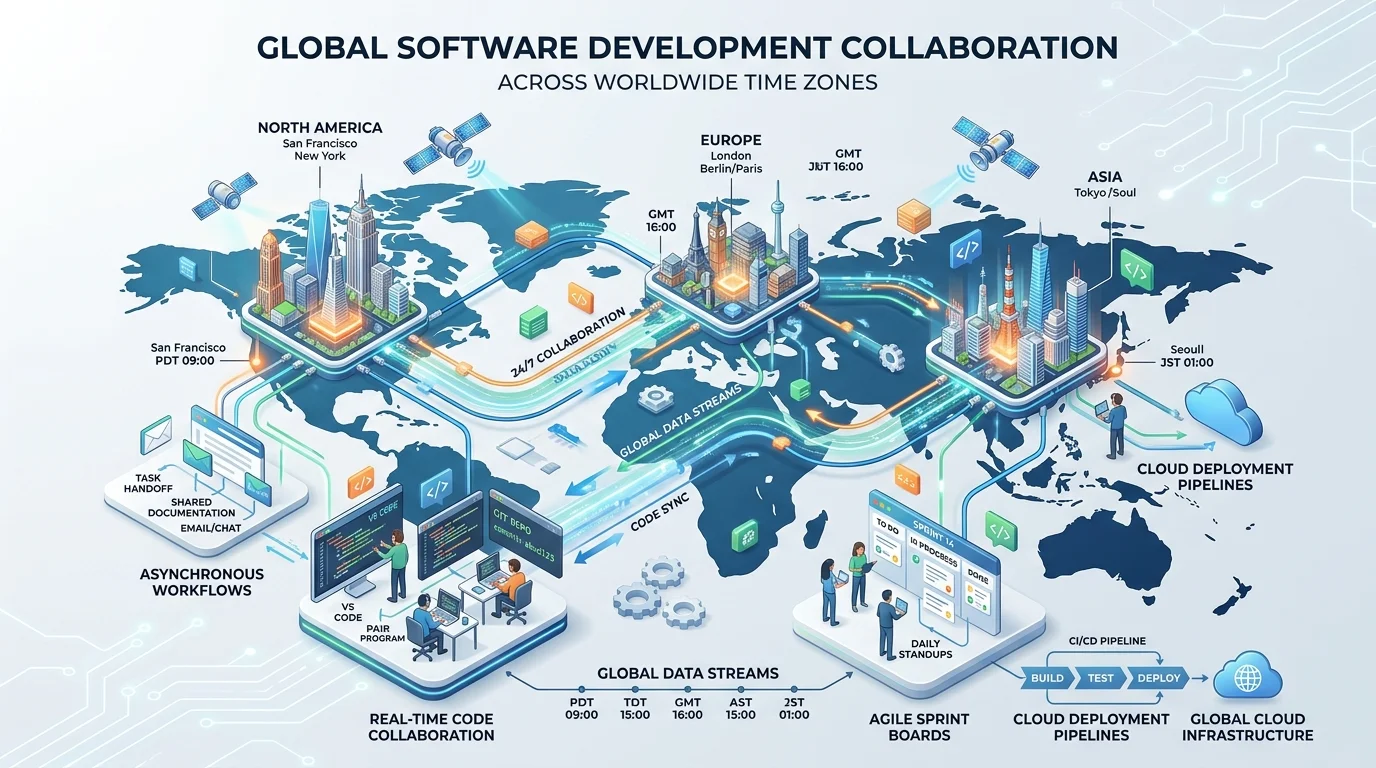
Global Software Development Collaboration: Coordinating Distributed Engineering Teams Across Time Zones

Time differences are a challenge for any distributed team. Finding a meeting time that suits everyone can seem difficult or even impossible.

Strategies for success:

Time Zone Coordination Tools: Use tools like World Time Buddy and Google Calendar to plan overlapping collaborative work hours.
Rotate Meeting Times: For recurring meetings, rotate the schedule so the inconvenience of early or late calls is shared fairly between regions.
Work Asynchronously: Encourage team members to share written updates or short recorded videos instead of scheduling rushed meetings.

3. Developing Cultural Competence

Why it matters:

Cultural background can influence team dynamics and how work gets done. If differences are ignored, they can lead to conflict and lower productivity.

Strategies for success:

Invest in Training: Offer cultural awareness sessions so team members can learn about and appreciate each other's cultures.
Celebrate Diversity: Invite team members to share their traditions and customs with colleagues.
Adapt Your Leadership Style: Different cultures have different working norms. Be flexible and adjust your leadership style to the team you are leading.

4. Building Trust and Team Cohesion

Why it matters:

Trust is central to any team. Without it, cooperation suffers and unhealthy competition can grow.

Strategies for success:

Start With Introductions: Help team members get to know each other at the start of a project with short introductions.
Hold Regular Check-ins: Regular one-to-one and team check-ins strengthen relationships and help people feel comfortable raising issues.
Online Teambuilding Activities: Promote informal interactions by arranging online games, team quizzes and virtual coffee chats.

5. Setting Clear Goals and Expectations

Why it matters:

Without clear goals, people in a distributed team can end up pulling in different directions. That leads to conflict, misaligned expectations and wasted effort.

Strategies for success:

Set SMART Goals: Make every objective specific, measurable, achievable, relevant and time-bound.
Define Responsibilities Clearly: Everyone should know what they are responsible for and how their work fits into the project.
Use Project Management Software: Tools such as Jira, Trello and Asana help with coordination.

6. Overcoming Language Barriers

Why it matters:

Even when everyone speaks a common language such as English, slang, technical vocabulary and accents can still cause misunderstandings.

Strategies for success:

Offer Language Support: Give team members access to language learning resources.
Encourage Questions: Create an environment where people feel comfortable asking for clarification when they are unsure.
Write Things Down: Written documentation is a reliable way to communicate clearly across language differences.

7. Building a Feedback Culture

Why it matters:

Feedback helps the team improve its processes and makes sure every member's voice is heard.

Strategies for success:

Run Retrospectives: At the end of each project or sprint, discuss openly what went well and what did not.
Collect Feedback: Use tools such as Polly or anonymous surveys to encourage team members to share their views.
Act on Feedback: When people see their feedback lead to real changes, trust grows and they are more willing to speak up again.

8. Providing the Right Tools

Why it matters:

Inadequate tools frustrate team members, cause delays and slow down productivity.

Strategies for success:

Invest in Collaboration Tools: Use GitHub for version control, Figma for design and Google Workspace for documentation.
Ensure Secure Access: Make sure remote team members have reliable, secure access to the systems and resources they need.
Offer Training: Where needed, run training sessions so the team feels comfortable with the tools.

9. Supporting Mental Health and Well-being

Why it matters:

Remote work can feel isolating, which can lead to stress or even burnout. That is why looking after mental health matters.

Strategies for success:

Encourage Breaks: Remind team members to take regular breaks, especially during long workdays.
Provide Flexibility: Allow for personal commitments and offer flexible working hours where possible.
Offer Resources: Share mental health resources, such as available counseling services or wellbeing programs.

10. Measuring Performance and Adapting

Why it matters:

Monitoring performance shows you which practices are working and which are not.

Strategies for success:

Track the Right Metrics: Measure team effectiveness with KPIs such as lead time, code quality metrics and client satisfaction.
Hold Regular Reviews: Regular performance reviews help assess both team and individual performance.
Embrace Change: Revisit your approach as the team's needs change.

Coordination remains a challenge for teams spread across the world and working virtually. But when global teams communicate clearly, understand each other's cultures, build trust and have the right tools and support, distance becomes an opportunity rather than a barrier. Drawing on diverse perspectives and working together not only leads to successful projects but also makes work more rewarding for everyone involved. As companies keep expanding internationally, these practices are essential for running effective, competitive software teams.

Global Software Development at REEA Digital

Want to grow your business? Global software development can help.

Software development no longer has to stay in a single location. With REEA Digital's global software development services, companies like yours can tap into the best talent, tools and technology available worldwide. Whether your project needs inventive design or efficient collaboration, our international teams are ready to deliver.

Why Partner With REEA Digital for Global Software Development?

Result-Oriented Collaboration: Benefit from 24/7 continuous operations, leveraging distributed talent across multiple regions for accelerated project delivery.
Enhanced Communication: Utilize modern collaboration ecosystems like Slack, Microsoft Teams, and Jira for transparent, real-time coordination.
Cross-Cultural Training and Team Cohesion: Foster respect and team alignment through cross-border cultural workshops and regular team-building activities.

Let’s Create Something Amazing Together!

Want to strengthen your operations with international expertise? Get in touch with REEA Digital today to discuss how our global software development services can help your project.

Contact us for advice or a free estimate, and take the first step toward your next successful project.


Back to all blogs
Share:
LET’S TALK

Let’s discuss your project.

Tell us what you need to build or improve. We’ll discuss your goals and a practical next step.

Request a call

We’ll contact you to arrange a call.